Imagine transforming a lump of clay into a stunning masterpiece that not only impresses friends but also makes your house look like a trendy art gallery. Pottery isn’t just a hobby; it’s a magical journey where creativity meets craftsmanship. Whether you’re channeling your inner Picasso or just looking to make a quirky mug for your morning coffee, the world of pottery offers endless possibilities.
Overview of Pottery Making
Pottery making represents a unique blend of artistry and technique. This craft allows individuals to create functional and decorative pieces from clay.
History of Pottery
Archaeological findings date pottery back to approximately 29,000 BCE, with early examples found in the Czech Republic. Ancient cultures utilized pottery for practical purposes, including storage and cooking. Civilizations like the Chinese and Greeks refined pottery techniques, contributing to the development of specific forms and styles. The invention of the potter’s wheel around 3,500 BCE revolutionized the process, increasing efficiency and precision in shaping clay. Over centuries, pottery evolved into an expressive art form, showcasing diverse cultures and their respective aesthetics.
Importance of Pottery in Culture
Pottery plays an essential role in cultural identity and heritage. Many societies view pottery as an art form that embodies traditions and craftsmanship. Functional pieces often serve ceremonial purposes, such as in weddings or religious rituals. Unique pottery styles contribute to community pride, representing local resources and skilled techniques. In modern contexts, pottery continues to foster creativity and promote mental well-being. Its therapeutic aspects attract hobbyists seeking relaxation through art, illustrating pottery’s significance beyond mere utility.
Essential Tools for Pottery
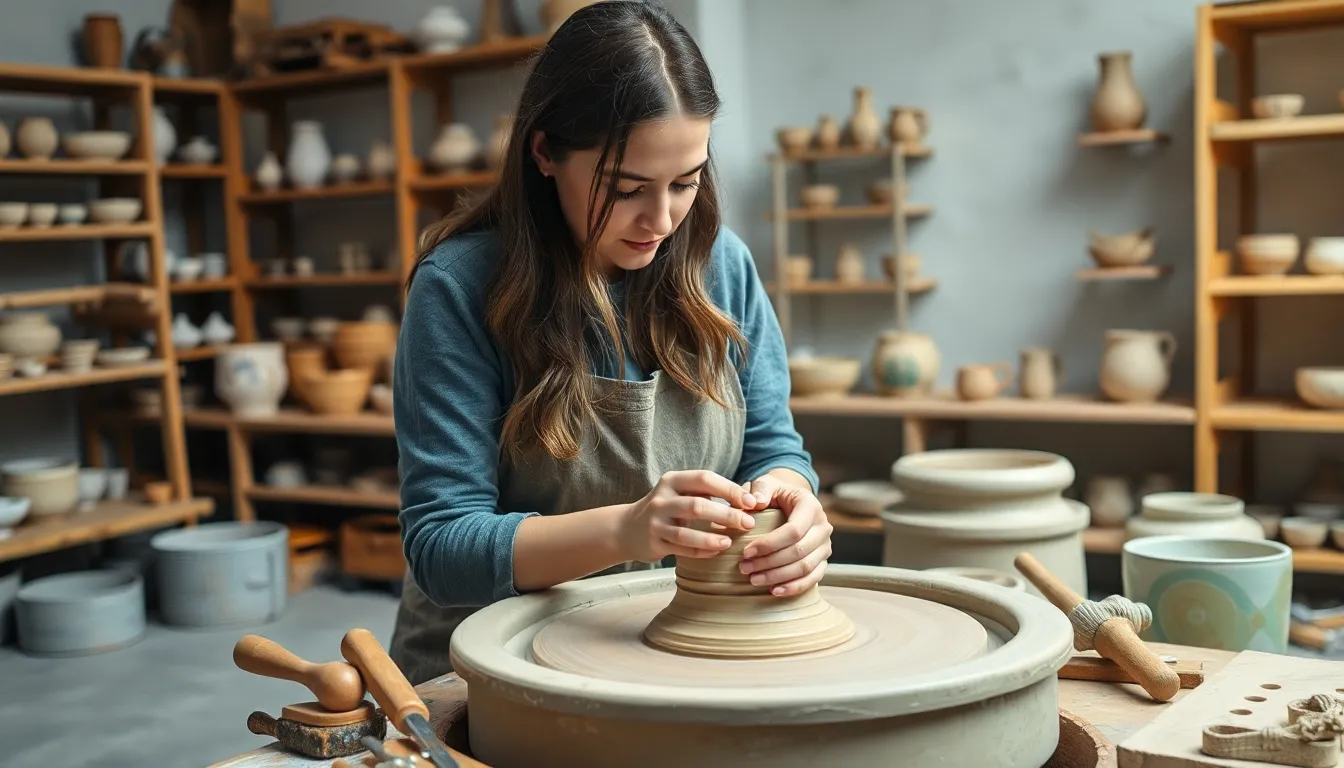
Understanding essential tools enhances the pottery-making experience. Familiarity with the right equipment makes the creative process smoother.
Types of Clay
Potters commonly use three main clay types. Stoneware clay is durable and versatile, ideal for functional pieces. Earthenware clay has a low firing temperature, making it easy to shape but less durable. Porcelain clay offers a refined appearance with a smooth texture, suitable for intricate designs. Each clay type possesses unique qualities, affecting the final outcome of pottery creations.
Pottery Wheel and Hand Tools
A pottery wheel is crucial for crafting perfectly shaped pieces. It offers potters control and precision, enabling the shaping of various items. Essential hand tools include loop tools, which allow for carving and trimming. Rib tools help in smoothing surfaces, while pin tools assist in detail work. These tools combine to enhance the overall pottery-making experience, providing accuracy and creativity.
The Pottery Making Process
Pottery making comprises several key stages that allow artists to transform clay into unique creations. Understanding each phase enhances the overall experience and quality of the finished piece.
Preparing the Clay
Preparing the clay involves kneading to remove air bubbles. Artists also add water to achieve the desired consistency. Different types of clay, such as stoneware or porcelain, may require specific preparation methods. The process may include wedging, which helps ensure even texture and eliminates imperfections. After kneading, it’s essential to let the clay rest, allowing moisture absorption for optimal shaping.
Shaping Techniques
Shaping techniques vary based on the desired outcome. Hand-building methods like coiling and pinching create beautifully organic forms. Using a pottery wheel allows for symmetry and precision, enabling the creation of bowls or vases. Each technique requires practice, and artists often experiment to develop their unique style. Additional tools like ribs and molds assist in achieving specific designs and enhancing creative expression.
Drying and Firing
Drying and firing represent critical steps in pottery making. After shaping, pieces must dry slowly to prevent cracking. Artists often cover their work with plastic to maintain moisture. Once dried to a leather-hard state, pieces undergo the first firing, known as bisque firing. This process solidifies the clay, preparing it for glazing. Glazing adds color and functionality. Following glazing, a second firing follows to bond the glaze, resulting in a durable and visually appealing finished product.
Tips for Beginners
Beginners should adopt a few practical strategies for successful pottery making. These strategies enhance creativity and craftsmanship.
Avoiding Common Mistakes
Starting with overly wet clay often leads to issues. Beginners overlook the importance of drying; a piece left too moist can crack during firing. Failing to wedge clay properly introduces air bubbles, which may cause weak spots. Beginners often rush through shaping, resulting in uneven pieces that lack harmony. Lastly, neglecting proper glaze application can ruin the final look of a creation. Each mistake offers valuable lessons that improve future work.
Recommended Resources
Exploring various resources accelerates learning. Books like “The Complete Pottery Handbook” provide insights into techniques and materials. Online platforms such as Craftsy and YouTube feature tutorials tailored for beginners. Joining local pottery classes connects individuals with experienced artists and like-minded peers. Engaging in pottery forums allows sharing experiences and tips with a supportive community. Websites like Pinterest inspire creativity through diverse pottery designs. Each resource adds a new layer to the pottery experience.
Conclusion
Pottery is more than just a craft; it’s a journey of self-discovery and artistic expression. Whether one aims to create functional items or intricate pieces of art, the process offers endless opportunities for creativity. Engaging in pottery can also foster a sense of community and connection with others who share a passion for this timeless art form.
As individuals explore the techniques and tools discussed, they’ll find their unique style and voice in the clay. With patience and practice, the rewards of pottery extend beyond the finished piece, enriching both the mind and spirit. Embracing this art can lead to a fulfilling hobby that brings joy and satisfaction for years to come.