Picture this: a cozy evening, soft lighting, and the delightful scent of vanilla wafting through the air. Sounds dreamy, right? That’s the magic of candle making. It’s not just a craft; it’s a way to transform any space into a personal oasis. Whether you’re looking to impress guests or simply pamper yourself, creating your own candles can be as rewarding as finding that last slice of pizza in the fridge.
But wait, it gets better! Candle making isn’t just about melting wax and pouring it into a jar. It’s an art form that allows for endless creativity. From choosing scents that make your heart sing to experimenting with colors that reflect your personality, the possibilities are as limitless as your imagination. So grab your apron and let’s dive into the world of candle making—where every flicker tells a story and every scent sparks a memory.
Overview of Candle Making
Candle making involves several key steps, each contributing to the final product’s quality. First, choosing the right wax is essential—options include paraffin, soy, beeswax, and palm. Each wax type offers different burning properties, scents, and aesthetics.
Next, candle makers require fragrance oils to infuse their creations with delightful scents. These oils come in various options, allowing for unique combinations and personalization. Color additives can also enhance visual appeal, with options such as liquid dyes or color blocks that ensure vibrant results.
Setting up the workspace is important for safety and convenience. Clean surfaces accommodate supplies like wicks, containers, and pouring pots. A thermometer helps in precise temperature monitoring, promoting optimal wax melting and pouring conditions.
Pouring wax into molds or containers requires careful attention. Ensuring wicks are centered prevents uneven burning and enhances safety. Allowing the candle to cool completely before removal avoids distortion and ensures a well-formed shape.
Burning techniques also play a crucial role in the candle’s performance. Maintaining wick length ensures effective burning and minimizes soot production. Following proper burning practices directly impacts the overall enjoyment of the candle experience.
Candle making is a multi-faceted process that combines art and technique. It invites makers to experiment with scents, colors, and formats, resulting in personalized creations that enrich environments. Exploring this craft opens up endless creative opportunities and fulfills the desire for unique home décor.
Types of Candles
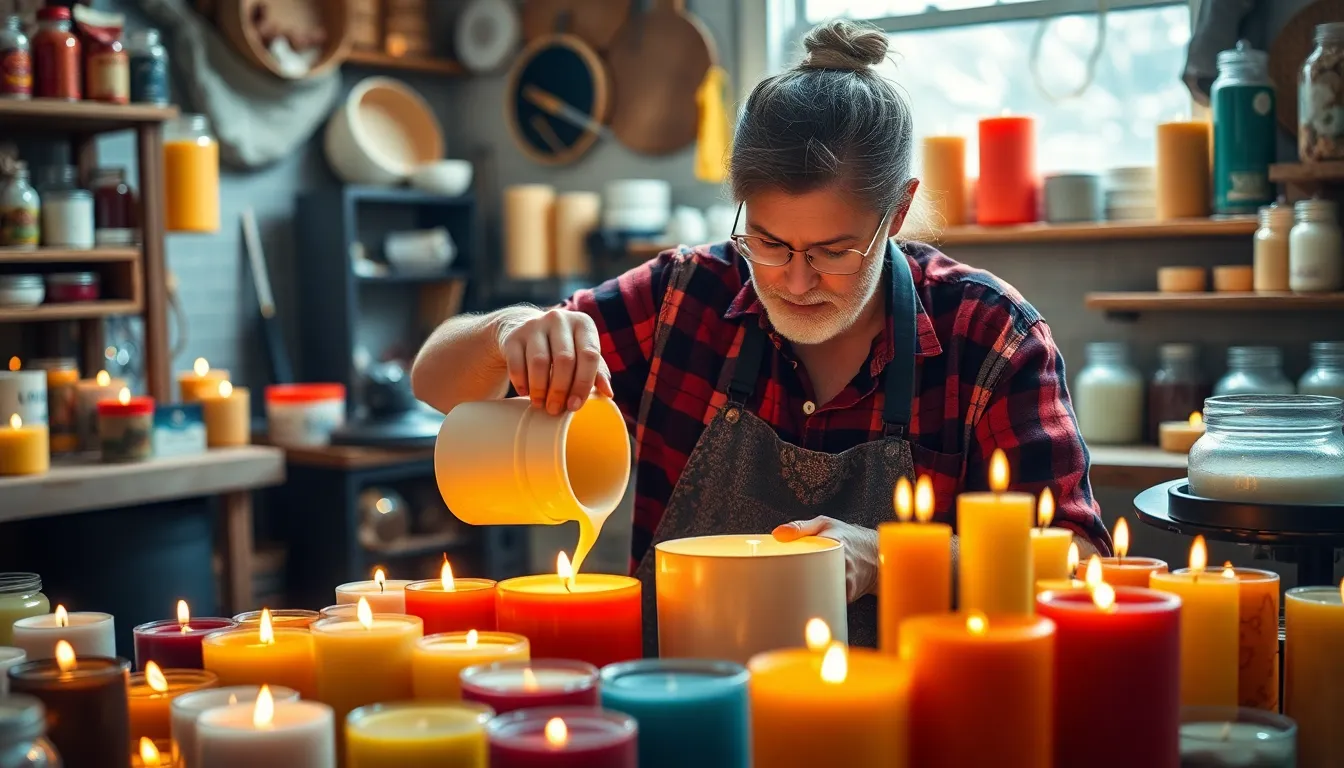
Various types of candles exist, each offering unique characteristics and advantages for candle makers and users alike.
Paraffin Candles
Paraffin candles are among the most common options on the market. These candles are made from petroleum byproducts, providing a strong scent throw. They burn cleanly and evenly, offering many fragrances to choose from. Often, these candles come at a lower cost than other types. The affordability makes them popular for both home use and events. Some makers appreciate the ability to easily mold and shape paraffin wax, allowing for creative designs. Additionally, paraffin candles often produce vibrant colors when dyed, enhancing visual appeal.
Soy Candles
Soy candles are crafted from soybeans, a renewable resource, making them more eco-friendly. They burn more slowly than paraffin, often leading to longer-lasting candles. People appreciate soy candles for their clean burn, producing less soot while releasing appealing scents. Their ability to hold fragrance well allows for stronger scent profiles, enhancing the overall experience. Many makers find soy wax easier to work with due to its lower melting point. This characteristic enables smooth pouring and precision in creating layered designs or different shapes.
Beeswax Candles
Beeswax candles are known for their natural origins, made from wax produced by honeybees. These candles emit a subtle honey scent, often appealing for those who prefer a more neutral aroma. Burning longer than both soy and paraffin, beeswax candles provide excellent value. Their natural properties also contribute to cleaner air since they can help purify it while burning. Many enthusiasts appreciate the warm glow emitted, creating a cozy atmosphere. Making these candles requires specific techniques, which can be rewarding for those looking to delve deeper into candle-making artistry.
Essential Supplies for Candle Making
Candle making requires specific supplies to achieve desired results. These essentials include waxes, fragrance oils, and wicks, all of which play crucial roles in the process.
Waxes
Various wax types serve unique purposes in candle making. Paraffin wax is affordable and offers a strong scent throw, making it a popular choice. Soy wax, derived from soybeans, is eco-friendly, burns longer, and produces less soot. Beeswax stands out for its natural origins and air-purifying qualities. Selecting the appropriate wax greatly impacts the candle’s burning properties and overall appeal.
Fragrance Oils
Fragrance oils add delightful scents to candles, enhancing the overall experience. This wide selection includes floral, fruity, and spicy options, ensuring every candle can evoke unique moods. The concentration of fragrance oil affects scent throw and potency, so it’s essential to choose high-quality oils for optimal results. Using the right fragrance oils can transform a simple candle into a captivating sensory experience.
Wick Types
Choosing the correct wick type is vital for candle performance. Cotton wicks produce a steady burn and are widely used in various candles. Wood wicks create a crackling sound, adding ambiance and charm. Specialty wicks, such as those with metal cores, provide enhanced stability. Test different wick types to ensure a clean burn and prevent issues like sooting or tunneling.
Candle Making Techniques
Candle making involves several techniques that enhance the crafting process. These techniques allow for creativity and precision in each step.
Melting and Pouring
Melting wax requires careful temperature control. For best results, heating wax to around 170 to 180 degrees Fahrenheit often creates an optimal pouring consistency. Using a double boiler prevents direct heat, promoting even melting. Pouring the melted wax needs steadiness to avoid bubbles. Pour slowly to achieve a smooth finish and prevent imperfections.
Adding Color
Adding color transforms a simple candle into a visual masterpiece. Using liquid, dye chips, or natural colorants can create a desired hue. Generally, adding around 0.5 to 1 ounce of dye per pound of wax achieves vibrant colors. Ensuring the dye fully dissolves in the melted wax guarantees even distribution. Experimenting with different combinations can produce unique effects.
Wick Placement
Wick placement plays a crucial role in candle performance. Centralizing the wick ensures an even burn without soot. A common recommendation is to leave 1 to 2 inches from the edge of the container. Proper length should extend at least ½ inch above the wax surface. Adjusting wick size according to candle diameter optimizes combustibility, maximizing scent throw and burn quality.
Tips for Successful Candle Making
Candle making requires attention to detail and a few essential practices for optimal results. Following tips ensures a rewarding crafting experience.
Safety Precautions
Wear safety goggles and gloves to protect against potential splashes from hot wax. A well-ventilated area minimizes fumes during the melting process, enhancing safety. Use a thermometer to monitor wax temperatures, preventing overheating and reducing fire risk. Keep a fire extinguisher nearby in case of emergency situations. Candle makers should avoid making candles near flammable materials to eliminate additional hazards.
Troubleshooting Common Issues
Bubbles in candles often occur during the pouring process. Pouring at the correct temperature can prevent this issue. Uneven burning results from improper wick placement. Centralizing the wick and ensuring it matches the candle diameter improves burning performance. If candles don’t release from their molds easily, freezing them for a short duration assists with easier removal. Low scent throw indicates a potential problem with fragrance oil ratios. Adjusting fragrance levels while maintaining the quality of oil can significantly enhance scent performance.
Conclusion
Candle making opens a world of creativity and personal expression. It allows individuals to craft unique pieces that not only enhance their living spaces but also reflect their personal style. By exploring different waxes scents and techniques one can create candles that are both functional and beautiful.
Whether making candles as a hobby or for gifting the process is rewarding and fulfilling. With the right supplies and a bit of practice anyone can master the art of candle making. Embracing this craft not only brings joy but also transforms ordinary moments into something special.