In a world where DIY projects reign supreme, having the right tools can make or break your masterpiece. Whether you’re transforming your living room into a cozy haven or crafting a birdhouse that would make even the most seasoned carpenter envious, the right DIY equipment is your trusty sidekick. Forget about those overpriced gadgets that promise the moon but deliver a mere paperclip.
Overview of DIY Equipment
DIY equipment encompasses a range of tools and materials that empower individuals to complete various projects effectively. Quality tools enhance creativity and ensure precision during construction or renovation tasks. Essential items include hand tools like hammers and screwdrivers, which handle basic tasks.
Power tools also play a vital role in DIY work. Drills and saws speed up the process, making intricate designs achievable. Investing in reliable power tools can lead to better results and greater satisfaction in the finished product.
Safety equipment cannot be overlooked. Proper safety goggles, gloves, and masks protect users from potential hazards. It’s crucial to prioritize safety to prevent injuries during project execution.
Storage solutions support organization and accessibility of tools. Toolboxes and pegboards keep equipment neat and easily reachable. Maintaining an organized workspace increases efficiency while executing projects.
Materials included in DIY equipment help bring ideas to life. Adhesives, paint, and wood examples serve as foundational elements for crafting and building. Choosing high-quality materials ensures durability and enhances the overall appearance of completed projects.
Rather than focusing on trend-driven gadgets, it’s beneficial to select functional and versatile tools. Evaluating the specific requirements of a project aids in determining which tools and materials to utilize. By concentrating on essential equipment, individuals can achieve remarkable outcomes in their DIY endeavors.
Types of DIY Equipment
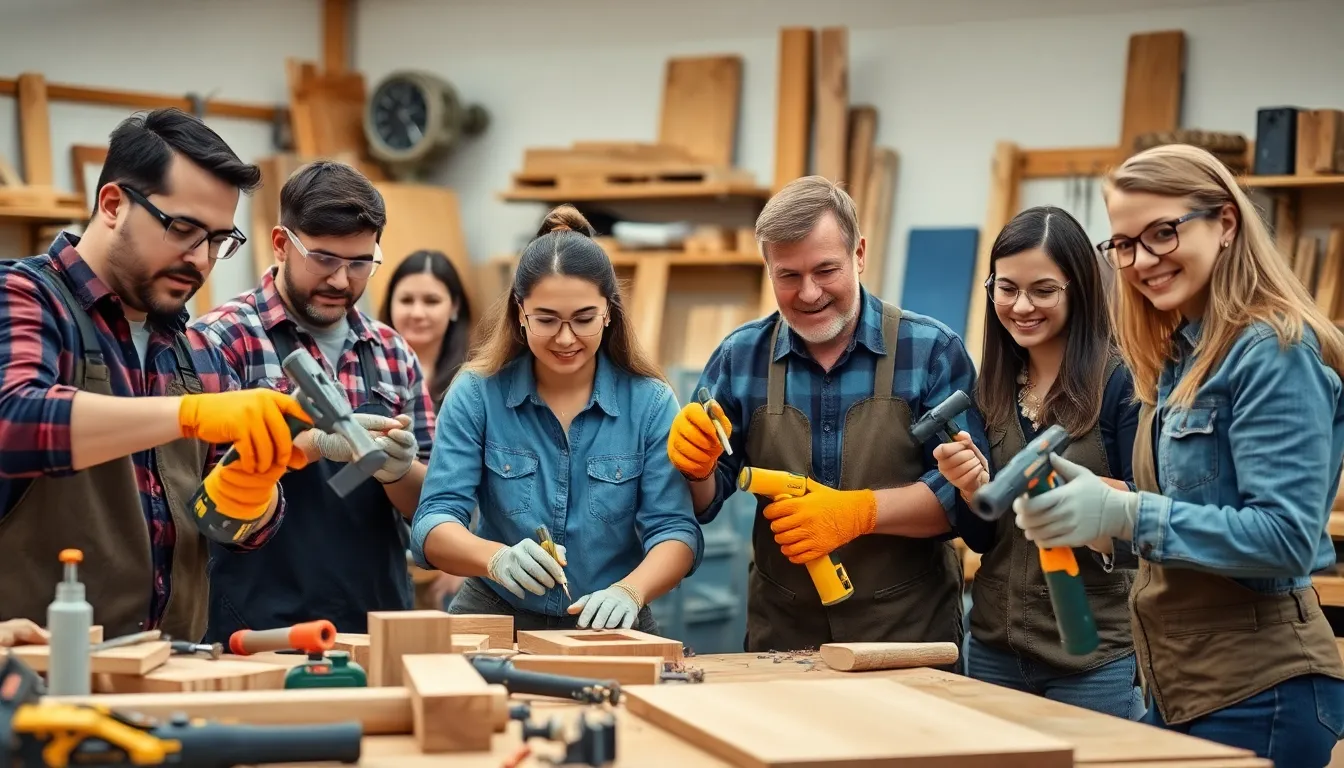
Selecting the right types of DIY equipment empowers the successful completion of projects. Quality tools not only enhance creativity but also boost overall productivity.
Hand Tools
Hand tools remain essential for a variety of DIY tasks. Common items include hammers, screwdrivers, and pliers. Each hand tool serves a specific purpose, enabling precise work without reliance on electricity. Craftsmen often prefer wrenches for tightening or loosening bolts. Additionally, utility knives are crucial for making clean cuts in various materials. Maintaining a well-rounded collection of hand tools ensures readiness for different projects.
Power Tools
Power tools dramatically increase efficiency in DIY projects. Drills offer versatility for creating holes in wood or metal. Saws, including circular and jigsaw types, facilitate cutting through thick materials with ease. An orbital sander smoothens surfaces quickly, saving time on finishing work. Many DIY enthusiasts value the convenience of nail guns for speeding up assembly tasks. Each power tool offers unique features that cater to specific project demands.
Safety Gear
Safety gear is vital for protecting oneself during DIY tasks. Goggles shield eyes from dust and debris, while gloves protect hands from cuts and abrasions. Masks filter out harmful particles, especially when sanding or painting. Ear protection becomes necessary when working with loud power tools. Investing in high-quality safety gear ensures comfort and effectiveness while minimizing risks. Prioritizing safety creates a secure work environment for successful DIY endeavors.
Choosing the Right DIY Equipment
Selecting the right DIY equipment significantly enhances the success of projects. A few essential factors improve decision-making when choosing tools.
Factors to Consider
Quality plays a crucial role in the longevity and performance of tools. Users should assess the specific needs of each project before purchasing. Ergonomics impacts comfort during extended use. Brands with reputable reviews often deliver reliability and durability. Compatibility with existing equipment can streamline tasks. A focus on safety features ensures protection while working.
Budget-Friendly Options
Affordable tools don’t compromise on quality. Many reliable brands offer budget-friendly versions without sacrificing essential features. Users can look for sales or discounts to save on purchases. Local hardware stores often provide a range of options to fit various budgets. Consider second-hand tools; they can offer great value if maintained well. Prioritize the most essential items first, gradually expanding the collection as needed.
Maintaining Your DIY Equipment
Maintaining DIY equipment ensures longevity and performance. Proper care prolongs the life of tools and enhances project outcomes.
Cleaning and Storage Tips
Clean tools after each use. Removing dust, dirt, and debris prevents corrosion and helps maintain functionality. Store hand tools in a toolbox or pegboard to keep them organized and easily accessible. Power tools benefit from being stored in a dry location, away from moisture. Labeling storage spaces enhances efficiency, making it simple to find necessary items quickly. Regularly check safety equipment for wear, ensuring readiness for use.
When to Replace Equipment
Monitor tools for signs of damage or wear. Dull blades, cracked handles, or malfunctioning power tools indicate it’s time for replacement. Inspect safety gear regularly, replacing it when necessary to prevent injury. A good rule is to replace hand tools every 5-10 years, depending on usage. Power tools may require earlier replacement, especially if they show significant performance issues. Investing in quality equipment ensures tasks remain efficient and safe.
Conclusion
Having the right DIY equipment is vital for turning creative visions into reality. Quality tools not only enhance the efficiency of projects but also ensure precision and safety. By investing in functional and versatile equipment, individuals can achieve remarkable results while enjoying the process.
Proper care and maintenance of tools extend their lifespan and maintain performance. With an organized workspace and the right materials, anyone can tackle DIY projects with confidence. Ultimately, focusing on quality over trends leads to successful and fulfilling DIY experiences.